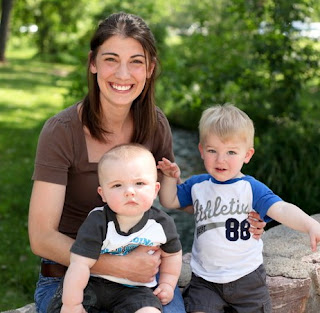
Monday, October 30, 2017

Off Meds and Scared Shitless

It's been awhile since I've written.  In fact, it's been so long that my last post adamantly defended our decision to medicate our son.  Between then and now there have been some pretty major developments.  We've moved across the country.  We've started a new school.  Our therapy schedule has been turned upside-down.

All of our kids have rolled with all of these changes beautifully.  But for our son on the spectrum, I'm especially proud of how well he has done.  We've had some hard days.  He's been confused.  He's been angered by some of the changes.  He's been elated by some of the new experiences.  He's been saddened for the friends, teachers  and therapists he's left behind.

But, overall, he's done well.  A new school schedule has meant he's getting up at 5:45 to catch the bus.  It was such a hard adjustment.  So hard that he was regularly falling asleep in school for large chunks of time.  We asked his psychiatrist about lowering his meds. He was on board.

As we lowered them I saw some positive changes.  We wondered if we are in a place now in which he would do better without meds.  After all, he's had countless therapies and has progressed amazingly with coping and communicating.  We have been down this road before but I seldom talk about it.  Because the positive changes of reducing meds were followed by a terrifying fallout of psychosis, aggression and self injury.

And I was filled with guilt for taking him off or for putting him on them in the first place....I wasn't really sure.  And then different meds were tried instead to help him cope.  None helped.  So he was put back on an antipsychotic and I cried.

I know what we say about medication and stigma.  It's alive and well.  But this grief was so much more than that.  It was a grief that acknowledged that this is my child off meds and he cannot function, he's miserable in his own skin.  And it's a heavy reality.

Fast forward to now.  He's off of everything because after talking to a new doc I discovered last time around the fallout could have been withdrawal.  It could have been the new sleep med.  It could have been any number of variables.  Of course, it could also have meant he really needs it still and that is yet to be seen.

So, there you have it.  And I haven't said it out loud because I feel like it will be perceived as though I did the wrong thing putting him on it then.  Or we did the wrong thing taking him off of it now.  Or I will be eating these words in a month when we realize there is no other way right now.

But I have to talk about it because I want you to know there may be a season in your child's life in which medication is a godsend for their peace of mind and ability to function.  There may be another season in which they thrive without it.  This is not an "I've see the light and medication is evil" post. Not by a long shot.  For a time it saved his life, it saved his family. It may very well be a necessity again.  As he's gone off of it I've asked him everyday, "Do you feel happier?  Do you feel more in control?  Do you feel out of control?  Do you feel too fast?  Do you feel too slow?"  And he can answer. And I know that's a luxury not every family has.  They were the same questions I asked him when he went on meds or when we changed meds.  I just want to know what's best.  I want to read into his actions and listen to his words and just do what's best for him.

If you get nothing else out of this piece please know this: the decision to medicate is not taken lightly.  Nor is the decision to stop a medication.  We know the gravity of these decisions.  They weigh on us every minute of everyday.  Right now it's hard, but we're okay.  And I think it's the right call.  A month from now I could hate myself for making this decision.  I wish to god we all had a crystal ball.  But we don't.  We love our babies and will move mountains to help them feel whole, regardless of which path gets them there.

Tuesday, June 6, 2017

Does He Look Like A Zombie?

Every time someone writes about some children needing medication for their mental health there are always at least a few comments, verbatim:

"I don't want my kid to be a zombie."  
"I would never medicate my child!"
"There are so many other options."
"Parents who medicate their kids are lazy."

So I have to ask....Does this look like a child who is drugged?  Does this look like a kid without emotion whose life has lost excitement and joy?  Does he look like he's zoned out or miserable?  Does he look meek or as if all of his uniqueness has been stripped away?

I didn't think so.  I see a child who can go about his day without constant anxiety over what might come at him next.  I see an individual who jumps and rocks and laughs.  I see a boy who can now function, concentrate and attend long enough to learn and discover the world around him.  I see a brother who can now enjoy playing with his siblings because his aggression and impulse control are so much better.  I see someone who still experiences every emotion and still has some hard days, but can now get through those days in a more constructive way.  

I don't discount that some people have had bad experiences.  I don't doubt some kids have been medicated when it isn't needed.  I fully understand some individuals have been medicated against their wills and feel strongly due to that experience.

But please don't apply one experience to every other situation.  Every child is different and has different needs.  We would never recommend just changing diet or hoping for the best for a physical illness; why is a mental illness any different?

I don't see a zombie.  I see a happy boy who I love and would do anything and everything to support.


Friday, May 5, 2017

My Kid's Disabled, I Can't Vote Red Anymore

I have always believed that one's political views are the result of a compilation of his or her experiences.  I consider myself an independent because I simply can't get on board with all of the main pillars of either major party's platform.  Although I have leaned Republican in past elections (on foreign policy, military budget, states' rights, and fiscal conservatism), I have realized over the past couple of years that I can no longer vote for the majority of Republicans.  

Why not?  It's simple.  I have a disabled child.  And Republicans are doing everything in their power to make his life harder.  Before being immersed in the special needs world, I didn't know what I didn't know.  I didn't know how much families with disabled children are affected by legislative decisions and how life altering it can be when services are taken away.  Many of the state early intervention programs that got my autistic child to where he is today are now in jeopardy because Republican lawmakers cannot see the value in giving disabled infants and toddlers therapy now allowing them to reach a higher potential in the future.  The outpatient therapy that has helped him so much is consistently harder for families to access.  With the repeal of the ACA many families will lose their only chance at accessing life changing therapy for their autistic children.

The proposed cuts to Medicaid not only affect families who are in a specific income bracket; they affect future disability benefits that our children will need as they age out of the education system.  These cuts also impact families who have other insurance but use Medicaid to fill gaps in coverage for their disabled and chronically ill children.  How can these lawmakers look their constituents in the eyes when they are knowingly pulling the rug out from under their families?  And many Republicans are fighting against my son's quality of life so openly and so blatantly that I can only conclude they simply do not care.

As much as I understand the argument for states' rights, after living in states that could care less about educating or providing services for their disabled populations, I can't argue that federal oversight, protections and enforcement of those protections are absolutely necessary.  When you have entire states that care more about their high school football program than staffing their special education classrooms, one can't gloss over the disparity in special education from one state to the next.  Having lived in multiple states and having dealt with multiple educations systems, I can tell you that any time we are heading to a red state I cringe and I worry about what will be available and if my son will have access to a free and appropriate education.  

The new administration is touting school voucher programs as if they will be helpful to those in the disability community, but we have seen the results in states with robust voucher programs in use and they aren't good.  Charter schools are performing just as bad as public schools throughout Michigan and now public schools are even more underfunded than before.  Not to mention that a number of charter schools will not accept disabled children.  And most voucher systems for disabled children require parents to sign away their education rights and have no input on their kids' education.  What a joke.  As a country we have worked for years towards more inclusion of our disabled students and now our Department of Education wants to send all of the disabled kids to special schools rather than supporting them in an environment with their typical peers.  We are going backwards.

As a military spouse, I do not only worry about my disabled child's current access to education I worry about services after he ages out.  We have to decide where to retire at some point and as much as I love the people and atmosphere of many of the states in which we have lived,  I can't bring myself to commit to settling down somewhere that will offer him absolutely no support when we are gone.  Some of the states we love the most have done away with all of their mental health support and some specifically have said their residency programs will no longer accept autistic individuals.  I can't really wrap my brain around how archaic some states are when it comes to their disabled and mentally ill populations.  But the one consistent thing I see over and over again with lack of services, lack of appropriate education and lack of healthcare is RED.  Red state legislators are perpetually failing their constituents in these areas and they don't seem to care. 

Yesterday, the House passed the AHCA, a bill that would allow states to opt out of any mandated coverage for those with pre-existing conditions (pre-existing conditions that include everything from autism to pregnancy).  The bill also would greatly impact Medicaid funding for disabled individuals.  Every medical, disability and autism organization has expressed opposition to the AHCA and what it would mean for our most vulnerable populations.  And yet enough Republicans are okay with that that it passed the House and in doing so they made it perfectly clear to me that I can no longer vote Red in good conscience.  And for those Republicans who voted against this heinous bill, good for you, but your party is still disappointing so many of us.  

I have found that a number of friends in the disability community feel the same way.  Regardless of where we stand on other issues, we can't get past the Republican party's attack on Medicaid and education.  The AHCA now goes to the Senate and I hope against hope that I am pleasantly surprised and enough Republican Senators will stand up for my kid and vote NO.  But, sadly, I have lost hope that the Right cares about my kid at all.

*****Added Edit*******

I shut down comments on this post for a bit because I don't have time to respond to every angry liberal in the world, but I would really much rather have a discussion. I have voted for Republicans, I have more often voted for Democrat or Independent candidates (even before having a disabled child).  Over the last few years the GOP's attack on the disability community has felt very personal and solidified my choice not to vote for them at any level, regardless of my stances on issues other than healthcare and education.  Perhaps, rather than jumping all over this post the left could see it as an opportunity to bring the insane number of people in the disability community still voting red into the fold?  I am very socially liberal and very empathetic. But there are a number of people who may not be and they need to see that their vote does affect THEM even if they are only concerned with their own family's situation. There are also a number of people who would never know the ins and outs of Medicaid funding and health insurance nightmares unless they are impacted.  Then there's a lightbulb, not just for their own family, but they realize many families are impacted by Medicaid cuts and an ACA repeal.  People are not going to agree with every part of every party's platform, but there are a huge amount of voters in the the disability community that are still voting red and this post is written to identify with them.  Perhaps from the title everyone is assuming I woke up one day with a disabled child and a sudden change of heart.  Not the case for me,  but with a different title and a different tone, it wouldn't have gotten the attention it needs.  And I hope others in the disability community will realize that voting red is voting against their kid and/or against themselves.  Even with the many many angry comments (that really aren't fazing me because most of them I didn't read and for the ones here on the blog they are based on a lot of incorrect assumptions) this post is still accomplishing everything I wanted it to accomplish as a number of people much more conservative than myself are messaging me "Wow, the GOP really doesn't support my kid's best interest so even if I am _____ (fill in the blank: Christian, Pro-life, Military), I can't vote red."   So, you're welcome.
   

Saturday, April 29, 2017

An Autism Mom's Review of Sensory Swim

In February of last year we enrolled our son in the Sensory Swim program.  A few months after starting with them, I wrote an article about the progress I was seeing and their methodology with autistic students.  We are finishing up with Sensory Swim due to a military move and I wanted to offer up a final review of our time with their program.  Drowning accidents kill way too many autistic adults and children and we, like many autism parents, worried for our son's safety.  Along with autism, our son has a number of deficits that work against him in a traditional swim lesson setting.  He has a speech delay, so he does not always understand and process verbal instruction.  He has ADHD and needs constant engagement and reinforcement to stay on task.  He has severe dyspraxia, which affects his core strength, fine motor and gross motor skill sets.  He has sensory processing disorder, which makes him very sensitive to sounds and other stimuli, making a number of environments hard for him.  He has severe anxiety and severe separation anxiety, making any new settings or working with new people difficult.

Initially I was very concerned that our son would not go with Andrew and Mary into the pool unless I was right there.  I also had a lot of anxiety myself that they would not be able to hang with him and that he might get aggressive or be too hyperactive during his lesson.  I was concerned for his safety in the water without me right there.  After just a few sessions most of those concerns were alleviated.  He enjoyed the water so much that separating from me was not that big of deal for him.  I also noticed that Mary and Andrew had a very good rapport with him and their other students.  They could not only handle his hyperactivity, but they expected it.  

We watched him over a few months get much more comfortable in the water.  They only worked in the deep end so that it forced him to attempt to tread water.  He learned how to hold his breath and "blow bubbles out" when he would go under water.  He wouldn't tolerate goggles, but got more comfortable with water in and near his eyes.  I thought, initially, well even if he doesn't learn to swim at least now he understands that he needs to try to get to the ledge or something to hold on to.  I thought at least now he knows not to breathe in if his head is under water.  And with how week his core is and how rough his motor planning is (at six he still cannot pedal a tricycle) I really did not expect much more.


Over time though, he started going a few inches further each time.  At first they would propel him and wait for his natural instinct to take over.  As he started getting a feel for it, over multiple sessions, they would back up further from the wall and encourage him to paddle heard enough to get to the wall.  They worked with him on kicks and paddling his arms separately as he couldn't seem to do it at the same time.  But eventually, he started kicking while he was paddling.  Once he got a little stronger and a little more sure of himself they would have him jump to them in the water.  They would back up a little more each time and he didn't seem to even realize that he was swimming.  He built on this and before long was swimming the width of the pool without any assistance.  It was really an amazing progression to watch.

After using Sensory Swim for about 15 months and observing them with my son and other children these are the things I like:  They don't shy away from harder cases or kids that hate the water and they go at the child's own pace and validate the child's anxiety.  They work with all age groups and meet the child where they are developmentally.  They know how to work with nonverbal, hyperactive and aggressive children (many swim programs won't even consider teaching children with these issues, regardless of their disability).  They use the deep end (where they can still touch but the children can't) for lessons and this seems to force the issue for kids who would otherwise be hesitant.  Once the child is starting to get it they give the child space to be independent in the water.  They will stay close by for safety purposes, but they will stay out of sight lines, thus encouraging the child to do it on their own.  Mary and Andrew are teaching seminars, printing materials and books, and answering questions for anyone who cannot get lessons with them but wants to know their methods.  They genuinely want to help our community and lessen the number of autistic children dying in drowning accidents every year.


I wish that Sensory Swim was available in more areas of our county as I truly believe they have the right attitude and methodology to help so many in the autism community learn to swim.  Because they have so much experience with special ed students and travel weekly to help as many families as possible, their lessons are more expensive than traditional group swim lessons making their program less accessible for some.  But for us, the proof is in the results and it was totally worth it.  I cannot put a price on one less thing to worry about when it comes to my autistic son's safety.
    
**I have not received any compensation, products, or services in exchange for this review.  I simply want other families to know what worked for us.

Wednesday, April 12, 2017

What About Me?; The Story Behind Our Autism Sibling Book


A little over a year ago our eldest son started having a lot of behavior problems both at home and at school.  He has always been our easy going kiddo and definitely the most mellow of our bunch, so imagine my surprise when I was called in for a meeting with the principal, the kindergarten teacher and a counselor to address out of control behaviors and outbursts that were occurring in the classroom.  What??  We had been seeing some emotional moments at home, but most of them seemed reactionary to living with a brother on the spectrum who has a lot of behaviors himself.

As I talked through the meeting with the school (a meeting at which they recommended therapy for him) it dawned on me that I was so busy tending to our autistic child's needs and behaviors that I had lost sight of how hard living in our home must sometimes be for a child.

"Are there problems at home?" they asked.

Wow was that a loaded question.  I explained, "Ever since the last move our autistic child's behaviors have been pretty bad.  There are a lot of mornings before school that he screams the entire time I am trying to get him ready.  He will go after me.  He will sometimes go after them.  Going from that to walking through the school doors ten minutes later, that's probably pretty hard..." my voice cracked.

His teacher spoke up, "He talks a lot about needing to be perfect and needing to do everything the right way.  He seems to get down on himself a lot.  His emotions lately have just been right at the surface and it takes very little to bring him to tears."

"He's definitely had to grow up fast and be the bigger person all of the time.  But he's usually such a happy kid.  I don't even know what to say.  We'll talk to him."


I didn't know how much to divulge. I was definitely being honest that I didn't know what had changed, but maybe that was the problem.  Nothing had changed.  For years Brennan (who is only a year older than his autistic brother) has had to hold it all together.  For years he has had to go into another room and lock the door when his brother is having a meltdown and trying to go after him.  For years therapists have come over multiple times a week to play with just his brother.  For as long as I can remember he has done everything in his power to keep the peace.  Even if that meant giving up his favorite thing or missing out on something he really wanted to do to avoid a public outing nightmare.  Even with all of that, I really thought he was handling it in stride.  He talked about knowing his brother is different and that he needs more attention and that sometimes he has different rules.  He always said he understood when birthday parties had to go a very specific way or when we couldn't watch the movie he wanted because his brother couldn't stand the sounds in it.

After talking to the school and an outside therapist I realized that although Brennan was talking a good game, there is only so much of that that a seven year old can truly grasp.  He knows things have to be different, but he won't really grasp the depth of why his brother is the way he is for quite some time.  And all of this time the resentment, anger and sadness about everything he has seen and everything he goes through have been simmering right under the surface.  He loves his brother and never wants to say when his feelings are hurt or when he is angry his brother takes something from him or hits him, because he knows it's not his brother's fault.  But that doesn't mean it's easy.

As I was looking for resources to help him understand everything he was feeling, I realized there isn't much available for autism siblings.  I saw a number of books that explained autism to siblings, but none that worked through these very real issues he was having and that I assume many autism siblings feel.  


After realizing how much all of this was weighing on Brennan he started counseling and he and I sat down and talked.   We talked about times he has been sad about having to leave something he was enjoying doing because his brother was upset.  We talked about how it makes him sad when he sees his brother hit me.  We talked about how far his brother has come and how now playing together is a lot easier than it used to be.  He mentioned that he loves helping his brother and trying to make him feel better when he is upset.  I asked him if he wanted to write down some feelings.  I told him that it always makes me feel better when I do.

I looked at what he wrote and some of it broke my heart and some of it made me very proud.  I told him there were a lot of other kids probably feeling the same way, but maybe they need a way to talk about it too.  He was very open to the idea of sharing his thoughts and feelings about being an autism sibling, but as we worked out some of the harder memories there were some tears.  At one point he said talking about certain memories was too painful and he got up and walked away.  He later came back to it and said he knew it was an important part of his story.


We formed his experiences and memories into a beautifully illustrated story about the up and downs of being an autism sibling.  As our illustrator Emily Neff brought the story to life, I couldn't believe how moved he was by his own story.  We kept our message positive, but we didn't shy away from the hard stuff.  We hope that What About Me? will help a lot of families that work everyday through the realities of living in an autism household but always try to see the beauty in being an autism family.  We are incredibly proud of Brennan for the person he is and the person he will be and much of that has been shaped by being an autism sibling.  We see in him compassion and empathy well beyond his years, and I am so grateful he was willing to share his story to help other kids.  


Thursday, February 9, 2017

When Life is Doom and Rainbows

Every time I write about something that is a harder part of raising an autistic child I am accused of painting a pessimistic picture of doom and gloom.  Every time I write about some amazing progress or breakthrough or positive aspect of autism I am accused of painting an unrealistic picture of butterflies and rainbows.  I guess that's why I always try to share the whole story.  But life, much like a post, will always present what we choose to see.  We can choose to see the good or we can choose to see the hard.  There are days when the hard overshadows the good and that's okay too.

I could tell you that this morning we got back evaluation results and our autistic son's speech is much better off than it was a year ago.  I could tell you that this morning he had a normal back and forth conversation with our school secretary and it made my heart smile.  I could tell you that he told me he loved me when he first woke up and that that's happening more and more everyday.  I could tell you that he was invited to a birthday party by a friend outside of school and I could tell you how special that moment was.

I could also tell you that upon arriving to occupational therapy today he threw himself down in the hallway and screamed that he hated me.  I could tell you that he nearly kicked through a glass door and that his sister had to be taken by another therapist to safety while we blocked and managed his meltdown.  I could tell you that right after that polite conversation at school he saw a teacher he didn't want to walk with and bolted away from me down the hall.  I could tell you that while I gathered him up he screamed obscenities and tried to bash his head into the cement wall. I could tell you I had tears in my eyes as I left the school.  I could tell you that while I'm thrilled we were invited to a party we most likely will not go because his behavior has been too impulsive for me to chance it.

All of that would be accurate.  And that was just this morning.  Our current status is not butterflies and rainbows and it isn't doom and gloom.  We take the doom a day at a time and we rejoice in the rainbows at every chance we get.

Tuesday, January 10, 2017

Military Autism Families Fear Loss of Services Amidst New TRICARE Policies

An ABA therapist working on fine motor skills
with a military child on the spectrum.
It's the same fight, different year for many autism families across our country.  As TRICARE rolls out new policies the ABA and military autism communities are scrambling to figure out what it all means and unfortunately it doesn't look good.  ABA is an autism behavior therapy that is currently one of the only treatments endorsed by the medical community to address maladaptive behaviors, help overcome deficits and delays, and provide autistic individuals the tools they need to communicate their wants and needs.  This therapy has been known to do everything from giving a nonverbal child words to reducing severe aggression.  It can reduce dangerous behaviors such as bolting and self-injury.  It can potty-train an 8 year who is still in diapers.  It can teach an autistic child how to feed and dress themselves.

Many autism families will attest that ABA therapy is value added.  Bonnie K. (autism parent) describes what a game changer ABA has been for her family: "ABA was a huge help for our family. My son went from combativeness and aggression to cooperative and able to attend school."  Because of similar testimonies and clinical findings most healthcare and state services are moving in a direction that will get more families covered (thanks to the tireless lobbying efforts of Autism Speaks and other organizations 45 states have now signed on to autism insurance reform).  While most state and private insurers are moving towards more coverage for autism families, TRICARE is making it more difficult to access the autism services it already covers.  TRICARE requires more ABA provider credentialing than any other insurance, which is costly and time consuming for providers making TRICARE patients harder to serve.  Their new policy (which was released at the end of November and started implementation on January 1st of this year) mandates providers administer and submit a behavior inventory every year for services to continue. This is in addition to the re-authorizations that need a specialist referral and severity level to be submitted every six months that families are already burdened with acquiring.  Many families have already had reauthorizations rejected in the new year due to the short notice for the required behavior inventory.  Thus military kids are already losing services due to the new ill-planned policy changes.
A military child with autism works on gross
motor and transitions with his therapist.

And that's not the worst of it.  The policy that most worries providers and families alike is the new requirement that already diagnosed kids will need to have diagnosing evaluations re-administered every two years to continue services.  The evaluations must be administered by an autism diagnosing specialist, many of whom have waitlists 12-24 months long for an initial evaluation.  And many of whom will not entertain the idea of taking up a valuable 2 hour evaluation slot for a child who already has a diagnosis when so many kids are awaiting initial diagnosis so they can start receiving services.  The new requirement that seems to be seeking a new diagnosis for a lifelong disorder has everyone pretty confused.  Military spouse Cassie J. voiced her frustration with the changes: "I'm just dumbfounded at re-diagnosing every two years. Are they supposed to outgrow autism?! The need for ABA may change, but the diagnosis itself will never change if they were initially correctly diagnosed by a qualified provider." 


An ABA therapist practices walking in the "wrong" direction
with her client.  He has struggled for months with rigidity
as to which way they can walk from his home.
Despite military health care facilities' continual pleas that they are undermanned and unable to carry out such testing, TRICARE has moved ahead with the new policy.  Military families are already facing waitlists every time they move, possible regression every time they move and nationwide provider shortages.  Provider and autism parent Kerri A. states, "As a parent, waitlists are already long. My children have been without services for 6 going on 7 months since we moved."  Advocates point out with the new testing requirements access will only be further restricted.  While families wait to be retested many fear they will lose services during critical times.  Autism parent Kimberly G. cannot imagine what such a loss would mean for her son. "ABA has changed our lives. I went from having a non-verbal, angry, unresponsive child to a verbal, happy, connected child. We went from not being able to leave our home due to meltdowns and anxiety to being able to go grocery shopping and go to church. My child went from not interacting with peers to being a kid that loves being around others and asks to play with friends. He is thriving...Losing services would be detrimental to him right now because he is on such a good path. He loves his therapists and the change in him is remarkable.  We live in a small town with one ABA provider. They are overloaded as it is. Having to deal with re-testing and re-authorizations, especially as slow as TRICARE moves, would be a disaster for us." 


An ABA therapist practices nice play with
a military autistic child who has had severe aggression
towards his siblings.
This action on behalf of TRICARE and the DoD has families wondering if the government is intentionally trying to limit access to covered services.  This isn't the first time TRICARE has slashed autism services and military families have paid the price.  In 2014, TRICARE planned to cut autism provider reimbursement rates in half. (http://thehill.com/policy/defense/220201-pentagon-to-cut-autism-healthcare-payments-in-half)  Many providers would have shut down, downsized or stopped taking Tricare clients leaving families with no option for services for their autistic children.  Due to the outcry from military families and the media attention, the Pentagon back-peddled and postponed rate reductions.  They later came out with a lesser rate reduction based on cost of living. (http://thehill.com/policy/defense/272749-pentagon-under-fire-for-proposed-cuts-to-autism-care)  These reductions hurt families in low cost of living areas the most as smaller providers collapsed under the red tape and lower rates.  Because of all of these changes and the surrounding uncertainty many military families' services went on hold or disappeared.  The most recent NDAA (after many senators and organizations' advocacy efforts) reversed these rate cuts, but for some providers it was too late and those areas are now without services altogether.

Families and providers are hoping these newest ill-conceived policies will be re-evaluated as well.  They are calling their Senators and reaching out to the powers-at-be in hopes that their voices will be heard.  But how long will it take the DoD to realize how detrimental these changes will be for families?  And how many military autistic children (who already face a great deal of challenges) will go without critical services in the meantime?


Tuesday, December 13, 2016

Don't Give Up On Me

Lately I feel like part of being a special needs parent means letting down everyone in my life.  I'm sure to a lot of friends, family and teachers it looks like I just don't care.  There are days when tasks don't get done well or at all.  There are mornings when socks don't match and his hair is not combed because after battling getting dressed, eating something decent and transition meltdowns, the hair was just too much.  I'm sure even to my own children it may seem like on some days I am too worn down to have much left to give.  And some days I guess I am.  But even in my exhaustion and occasional disheartenment, I hope they can see I'm always trying and I hope they don't give up on me.

To the school that sees us come in late nearly half the time and wonders why I don't volunteer or why the constant forms are never signed on time: Don't give up on me.  Please know we are always trying out new methods and new routines to make mornings easier on him.  Please know if life is ever not filled with outpatient appointments and medical forms, I would love to volunteer for my oldest son's parties.  Please know when it comes to forms sent home in the backpack, they're an afterthought, because they have to be.  And when I find them the next morning they go into a stack of papers that I swear I'm working through as quickly as I can.  

To the friends that leave voicemails that go unanswered: Don't give up on me.  Please know it is not that I don't want to talk to you.  It's not that I don't care what's going on in your life.  Knowing that you called or texted, I know that you care and in the spare moments I have when I have enough in me to give you a real conversation I will call you back.  I don't know when that will be, but please don't give up on me.

To my husband when I am often cross and the house is far from perfect: Don't give up on me.  Please know you are often seeing the climax of a trying day in which I tried to hold it all together and by the time you get home is when I usually start to fall apart.  Know that I want to have a better attitude and a better part of me to offer up at the end of the day, but right now I don't.  Please know that I would love more than anything for the house to be picked up, the laundry caught up and dinner to be made (or even prepped), but I know it's a rarity.  I hope one day things will even out a bit, and that it will be less of a rarity.  I'm not giving up on that.

To the family that wishes we could visit more:  Don't give up on me.  There is always the hope that one day traveling will not be such an ordeal.  Maybe one day our son will be able to go on a plane.  Maybe some day we won't worry about regression anytime we stay away from home.  Please don't ever think we do not want to see you, but for now, we do the best we can to do what's best for our family.  I'm not giving up on the hope that someday it will be easier.

To my neurotypical kids who want nothing more than my attention, love, and time: Don't give up on me.  There will always be moments when I say "Not right now,"  but that doesn't mean I don't care.  Please keep showing me your Minecraft worlds and the artwork you brought home from school.  Please know that even when mommy is tapped out for the day, it doesn't mean I do no love you.  It means I need to regroup and reenergize so I that I can be the best mom I can be tomorrow.  On the days your brother takes up the majority of my time and effort, know that you are just as loved and cherished, and that I do my best to take care of each of you based on your different needs.

To my son on the spectrum: Don't give up on me.  There will be days when it may look like I have thrown in the towel.  There will be days when the most recent therapy or medication seems to be helping you so little that my hopelessness will be palpable.  There will be days when I light up at progress, but there will also be days when my inner-cheerleader is not quite as loud.  There will be days when I am overcome with joy and optimistic hope, but there will also be days when the grind of accessing that hope gets to me.  There will be days I am giving you my all because you absolutely need it, but there will also be days when I have nothing left to give.  Please know that through it all, I will never give up on you.  And on the days when I'm barely holding it all together, don't give up on me.


Sunday, November 27, 2016

What's Up With Special Needs Families Wanting "All That Special Treatment"?

Last night I had my rather large six year old autistic son in the seat of a rather small cart at the grocery store.  He definitely does not fit in carts as well as he once did and I get a lot of looks and even some comments.  Yesterday, I got two comments from the same person during our short grocery trip.  Initially, the older gentleman said to my son, "You barely fit in there boy."  I just smiled and kept walking, knowing he didn't mean anything by it and thinking he was just trying to make conversation.

 The second time we came across him, he said, "Boy, you got it made.  Enjoy it while you can.  She can't push you around forever."  Once again, I just brushed it off.  I could have told him my son would have much rather been out and free to explore.  I could have told him I would much rather that my son had the impulse control and danger awareness to walk next to my cart and not ride in it.  I could have pointed out that my son has autism and would fit much better if the store had a cart that could accommodate children and adults with any number of special needs.  But I didn't.  Because as much as I have taken it upon myself to raise the banner of autism awareness, sometimes I am tired and do not feel like I owe everyone we encounter a detailed explanation as to why we do the things we do.

Although the man didn't say it, I am sure he thought my son was spoiled or receiving special treatment.  And even though he did not know my son is special needs, there are a number of people in our society that know someone is special needs and cannot stand the "special treatment" that person seemingly receives.  Why does someone with autism need a handicap placard?  Why does an autistic preschooler get free preschool from the state?  Why does the little girl with cerebral palsy get a one to one aide in the classroom?  Why does the little autistic boy get to be in the play if he can't remember the lines?

But to the people that ask these questions, I guess I want you to realize that more than anything we want our children to be treated the same and have the same opportunities as anyone else.  I would have loved it if my son would not have needed special needs preschool from the state, but no private preschools would accept an autistic preschooler with behavior issues who was not potty trained.  And when we lived in a county without public options we were not treated the same, we had no options.  I would love it if my son was not a bolting risk and parking lots presented the same risk to him as they present to any other child, but the truth is he is much more at risk in a parking lot and parking close could save his life.  I would love it if my son could use the same mens bathroom on his own, but he cannot and a family or neutral bathroom is incredibly helpful.  The mothers of grown children in diapers would love it if their children toileted independently, but they need changing tables big enough to fit their children and when they do not have the same access to a table that fits they have to change their large children on public bathroom floors.   We would love it if our children did not need aides in the classroom, but unfortunately many of our children cannot make academic gains or even function without one.  So in order to access the same education, many children need an aide.  We would love it if our kid could be in the play, say his lines, and stay in his place without help, but right now he can't do it on his own.  I would do everything in my power to make it work, but sadly most of the time, our kids are excluded all together rather than being given help or a chance to be in the same play as everyone else.  We would love it if our kids could go on the same field trips and get the same experiences as the rest of their class, but many times they aren't given the option.

So the next time you hear someone proclaiming that our children with special needs should be treated the same as their typical peers tell them you agree that our kids should have the same opportunities and be treated with the same respect as everyone else.  But the way to achieve our children being treated the same is to accept that their most basic needs are genuinely different and everyone has a right to have their needs (not wants) met accordingly.


Wednesday, November 16, 2016

Why Words Are Never Just Words

On Thursday my friend's daughter (a beautiful, fourth grade girl with autism) opened her desk and found this note from a classmate: "Just Kill Yourself Now!!"

Fourth grade.  Nine years old.  Let that sink in.  The school is currently investigating, but what will be done?  Will it be enough?  Will it stop the bullying?

In September, 9-year-old Jackson Grubb of West Virginia killed himself after enduring months of bullying.  Just one month earlier 13-year-old Daniel Fitzpatrick killed himself after documenting all of the instances of bullying in a letter one month prior.  In October, 11-year-old Bethany Thompson killed herself after being bullied for her curly hair and crooked smile.  She survived cancer, but could not survive the bullying she endured daily.
These are just a few cases from the last few months of lives lost to bullying.  A quick internet search reiterates that the number of names and faces and lives and families goes on and on.  In all of the above cases the parents knew.  And in all of these cases they informed the school of the problem, with some having multiple meetings with principals and teachers to advocate for their children.  But it wasn't enough.  And things didn't change.  Ultimately, these parents could not protect their children from the hate, ridicule and the verbal and physical assaults that they faced daily.

Don't tell me bullying is unheard of in our schools today.  Don't tell me it's getting better.  Don't tell me our kids just need to toughen up.  Don't tell me it's not your problem.  Don't tell me that schools are doing everything they can.  It takes more than an assembly.  It takes more than a poster.  It will take proactive teachers and caring administrators to stop an epidemic that is killing our kids.

But the blame does not all fall on the school.  This debasement is not "just kids being kids".  This cruelty and attitude are learned and emulated.  And they are learning it from us.  No child learns to hate or mock differences in a vacuum.  They learn it from their parents.  They learn it from their teachers.  They learn it from our leaders.  They learn it from a society that tells them different is a bad thing and being different makes someone a target.    

It's evident that many kids still think bullying is okay.  The deaths of those who couldn't take it any longer are on our hands.  Collectively, we have to take the blame.  It's on you.  It's on me.  Because the culture of intolerance and exclusion starts at home.  And it has to stop.

Monday, November 14, 2016

To the President-Elect from an Autism Family

Mr. President-Elect:

I don't have to tell you this has been a tumultuous election year.  And I probably don't have to tell you that there are a number of autism families (and people across a number of disability communities) that are concerned about what the next four years will look like for us.  There are a number of reasons why you should care what our community thinks and how we are impacted, but the most obvious reason is the numbers.  One in every 68, Mr. President-Elect, that is how many individuals in our country are diagnosed with autism.  And of course the number of people impacted by autism (the parents, the siblings, the teachers and the professionals) is much, much higher.  The other reason your team needs to recognize and acknowledge the needs of this community: there are some pretty dire needs.  To any leaders who do not think our community is in need of assistance, early intervention, insurance coverage or programs, I implore you: go spend a day in an autism household from sun up to sun down (actually you will probably need to stay a great deal longer than that, because our days never end when the sun goes down and our days always start before the sun comes up).  The experience would be enlightening, to say the least.

Now that I've explained why you should care, here are five ways you can show our community that you do.

1.  Keep and enforce federal education requirements that impact special needs children.

I understand that a number of issues need to be solved at the state level, but as a military family we have lived in three states with our autistic son and let me tell you, the disparity between states is disheartening.  Some states are not even following current IDEA or other federal guidelines and if we strip more federal guidelines from our education system, I fear that disparity will be even worse.  When we lived in Alabama, our son had no access to special needs preschool and because of his challenges due to autism, no private preschools would accept him.  I was told Alabama was breaking the law by not following federal guidelines, but the only way for me to right that wrong was to sue them.  There is very little oversight as to federal guidelines states have to follow regarding special needs and that needs to change.

I understand states' rights, but when states and counties choose to pay their high school football coaches 6 times more than their teachers (no, really), there is cause for concern.  When some states look the other way when children with autism are locked in closets half the day, there needs to be more, not less, done to ensure our public schools all over the country are upholding ethical and effective methods with special needs students.  When our kids cannot tell us what happens at school, we have every right to worry about their education and safety, and we hope you understand why federal regulation matters to us in this regard.  And from a holistic perspective, these things should matter to you too as research has shown that autistic children with access to early intervention and quality early special education have much better likelihood of needing less supports as adults.

2.  Understand why we are fighting for health insurance coverage for life-changing and imperative therapies and fight for it with us.

When our children are first diagnosed with autism we are handed a laundry list of things we MUST do to ensure they have the best chances at the highest quality of life and to become the most productive members of society they can be.  Imagine our surprise when most of these therapies and interventions are not covered by private health insurance.  There have been strides made in this area over the last ten years thanks to the tireless lobbying efforts of Autism Speaks and other organizations to get coverage.  Unfortunately, though, even in some states with now mandated autism therapy coverage, health insurance companies have been able to help shape legislation so they can still legally avoid covering these therapies.

Under the Affordable Care Act, some families have had their first hope of accessing these therapies.  Many families have signed up for much more expensive plans just so they can get this coverage.  While the Affordable Care Act is not perfect and needs some serious changes to stop skyrocketing premiums, please understand that when there is a threat of complete repeal, these families are watching their hope that their autistic children could get help and be successful slip away.

As a military family we have been fortunate to access these therapies when we are stationed at bases in states that have state-mandated coverage.  In states without mandated coverage, there are very few providers and even covered families cannot access care.  While the rest of the insurance industry and the Affordable Care Act are slowly starting to cover more for autism families, our coverage has become more restricted over the last year, with Tricare lowering reimbursement rates for providers and requiring more provider certification than any other insurance company.  This makes military families much less attractive to providers, and many providers (especially in low cost of living areas where rates were hit the hardest) have stopped accepting Tricare patients all together.

As you can see, autism insurance coverage has a long way to go and it matters.  Imagine knowing there were services that would enable your nonverbal child to talk or communicate their wants and needs, to go on public outings that before could not be tolerated, or to be mainstreamed instead of needing special education; imagine knowing those services exist but not being able to access them due to your health insurance plan.  That is the position in which many families in our country find themselves.  And it's heartbreaking.

Just as with the federal education regulation, this isn't just an emotional argument; it's an economical argument.  When we have years of research illustrating what a difference these therapies can make early on and how such therapies give autistic individuals a better chance at being productive members of society, this is clearly something we can all acknowledge is worth the fight and the expense in the long run.

3.  Realize that a huge population of autistic children are aging out of the education system and work with us for autistic adult housing, vocational training and employment placement.

This is an area that needs serious attention.  With a growing population of autistic individuals getting older we need to have a plan in place to ensure their needs are met.  As families, we plan as much as we can, but there is only so much we can do.  And those of us that have saved and put away funds to support our autistic loved ones when we are gone are constantly worried that those funds will keep them from getting disability or placement.  Our son is currently in kindergarten.  At his IEP meeting this year we were handed a pamphlet and told that we need to start getting on adult residential placement lists now if that is a concern because the waitlists are so long and residence centers are so sparse.  Many autism parents and siblings lay awake at night worrying and wondering who will take care of their autistic loved one when they are gone.  We have to have more quality centers, more assisted communities and more programs for adults on the spectrum.  We need to offer incentives and breaks for professionals and investors that can make this happen.

Of course, not all of our autistic loved ones will need adult assisted living arrangements.  But even for those higher functioning individuals their employment rates are incredibly low compared to the national average.  Many in our community want to work and want to contribute to society, but are often not given the chance or opportunity due to their challenges.  Autistic perspectives, work ethic, honesty and talent are an untapped well from which our society needs to start pulling.  We need to start looking at ways to incorporate more autistic individuals into our workforce.  Programs for specific vocational training and placement could start in high school, especially for those not able or not wanting to go into higher education.  Ultimately, such a plan would mean more autistic individuals in the work force and able to provide for themselves.  

4.  Realize that many parents and caregivers of autistic individuals are caregivers 24/7 and cannot work, run errands or rest.  Work with us to find respite and caregiver financial relief solutions.

I know a lot (and I mean A LOT) of autism families with severely autistic children.  Unfortunately, I know very few who have access to or know how to get respite services in their county/state.  Most of the families I know have one parent who stays home, not by choice, but by necessity.  I know families whose children are too severe to be accepted to daycare or for an in home sitter to be qualified to take care of them at a cost that would not break the bank.  Not only can one parent not work, but while many families with chronically ill children qualify for in home nurse care, because our children have a neurological condition that is not an option for us.  There are respite services through some states and some programs, but there is so much red tape and waitlists are so long that very few people know how to access those programs.  We see study after study showing the mental and physical health strain on parents of autistic children, yet there are few options available for us to have any time to take care of ourselves so that we can best take care of our children.

We need to look at more ways the national government can help states help us.  That may be as simple as streamlining the respite application process or in some states it may mean starting a medicaid waiver program so that families of all economic standings can qualify for much needed respite care.  After living in three different states with an autistic child, I can attest that some states will need a nudge to make this a reality for all autism families.

Many of us are saving the government a great deal of money by continuing to care for our disabled children after they age out of the system and not signing over guardianship to the state.  For those of us that choose to take care of our kids well into their adulthood, it should be easier for us to get funds to be our son/daughter's caregiver rather than being forced to put them in a home.  For those who have a severely autistic child and are single parent families, they have to have more options for funding as a caregiver, especially when they try over and over again and do not qualify for disability.  

5. Help us find national solutions for autism wanderings and police relations with autistic populations within our communities.

One of the hardest statistics to swallow as an autism parent are the number of accidental deaths due to wandering.  Many autistic children and adults have no awareness of danger.  Many also have a tendency to bolt or wander.  We as parents do as much as we can to keep our kids safe.  We have special locks, some of us use harnesses, we are hyper-vigilant in public settings and we are very specific about who can watch our children.  Even with all of that, accidents still happen and we cannot plan or prevent every situation, especially as our children get older, bigger, and are sometimes in the care of a school district.  When autistic individuals do get away from their caretakers many of them cannot communicate their name or address, or understand if someone is trying to help them or hurt them.  Around half of all autistic children exhibit wandering behaviors.  And the outcome can be fatal, especially if the child goes near water.  Over 90% of autism wandering deaths last year were due to drowning.

Unfortunately, officials will not issue an Amber Alert for an autistic child gone missing if they have not been kidnapped.  Families have primarily relied on social media and local media to try to get the word out that their child, teen or adult on the spectrum is missing.  Some communities have started their own local alert systems, but with the number of autistic children that go missing daily we need a national alert system for the autism community.

Some local police departments have received grants to distribute trackers, but getting one for your child, like everything for special needs families, is very difficult.  In most cases, your child has to have already gone missing at least once in the past to qualify for one.  But, if we look at the amount of money spent on recovery efforts when autistic individuals go missing (the police, the helicopters, the dive teams, etc), a GPS tracker for every autistic child with wandering tendencies would be less expensive in the long run.

Another safety issue for our community that has recently garnered national attention: encounters with police officers.  Autistic individuals are seven times more likely to have encounters with police than their typical peers.  These encounters are often nerve-wracking or even terrifying for people on the spectrum.  They cannot always verbally express themselves or understand commands.  A sensory meltdown, can also look like a rage and be misinterpreted, especially if the autistic individual is older and bigger.  And because people with autism do not always have the awareness to realize the gravity of the situation, things can be miscommunicated and turn tragic very quickly.

Many police officers have not been around autism enough to have a real understanding of how to handle encounters with people on the spectrum.  These two communities need to be able to trust each other.  More training is needed for police officers when it comes to mental health and neurological disabilities, but we cannot stop there.  I would love to see communities across the country have autism awareness events at which police officers could be exposed to autistic individuals and autistic individuals could be exposed to and try to get more comfortable around police officers.

Notice What Is Missing From This List  

Millions of dollars have been spent on trying to find a cure for autism.  Millions more have been spent trying to prove a link between vaccines and autism.  As an autism mom, I beg you to look at all of the most current (peer-reviewed) research data on these topics and listen to the current professionals in the field.

More than 3.5 million Americans fall somewhere on the autism spectrum and if we can shift the focus and more funding from cure and cause to support and care the future for this community and all of America will be that much brighter.

I want to tell you a story...

I want to tell you all a story. It’s about a mom who had two babies 12 months apart. And the second baby was different. He was sad or mad...